
by
SETH ROSSER
Residential solar has become an increasingly visible part of the energy landscape, with many United Cooperative Services members installing systems to produce their own electricity and reduce their electric bills.
But the residential solar landscape is shifting. As the industry faces the loss of a major federal tax incentive and growing uncertainty among solar companies, United has seen fewer members installing new solar systems.
A Major Change for Residential Solar
One of the biggest changes is the expiration of the federal Residential Clean Energy Credit, which allowed eligible homeowners to claim a credit equal to 30 percent of qualifying residential solar costs. That incentive expired at the end of 2025, changing the financial equation for those considering a new solar system. The tax credit played a significant role in making the numbers work, and its approaching expiration contributed to a rush of installations before the end of the year.
Without the 30 percent credit, the cost, potential savings and time it takes for a system to pay for itself may look very different than they did just a year ago.
Federal incentives remain available for certain commercial and business solar projects. As a result, some solar companies are offering third-party ownership arrangements for residential systems, generally through leases or power purchase agreements (PPAs).
With a solar lease, a third party owns the system and the member pays a fixed amount to use it. A PPA is another type of third-party solar arrangement, but instead of paying to lease the system, the homeowner pays the system owner for the electricity it produces.
Solar leases are allowed within United’s service territory, subject to applicable requirements, but PPAs are not. United is a non-opt-in entity, or NOIE, and has not opted into the deregulated electricity market to allow PPAs.
For United members, solar systems may be purchased with cash, financed or leased at a fixed price. Unlike a PPA, these payment arrangements are not based on how much electricity the system produces.
Understanding which type of agreement is being offered—and carefully reviewing its terms—is important before signing any documents.
Before Signing a Solar Contract
Members considering installing solar, take the time to ask questions and understand exactly what they are agreeing to before signing a contract. Consider asking:
-
Who owns the system, and what type of agreement is being offered—a purchase, lease or PPA?
-
What happens if the installer or owner goes out of business?
-
Who is responsible for maintenance, repairs and service, and for how long?
-
What are the equipment and workmanship warranties?
-
How much electricity is the system expected to produce each year, and what happens if it produces less?
-
What are the payment obligations, and how could they change over time?
-
What happens to the solar agreement if the home is sold?
What Happens When a Solar Company Goes Out of Business?
The financial health of solar installation companies is another consideration. Rapid growth brought many companies into the residential solar market, but as the industry has slowed, some have reduced operations, closed or filed for bankruptcy.
A company’s closure can create challenges for homeowners because panels, inverters, batteries and other equipment require monitoring, maintenance, repairs and eventually replacement. Homeowners may also depend on their installer for warranty work or troubleshooting, which can become more difficult if the company is no longer in business.
For that reason, choosing a solar company involves more than comparing system size and price. Homeowners should also consider whether the company is positioned to provide long-term service and support.
Monitoring a Solar System
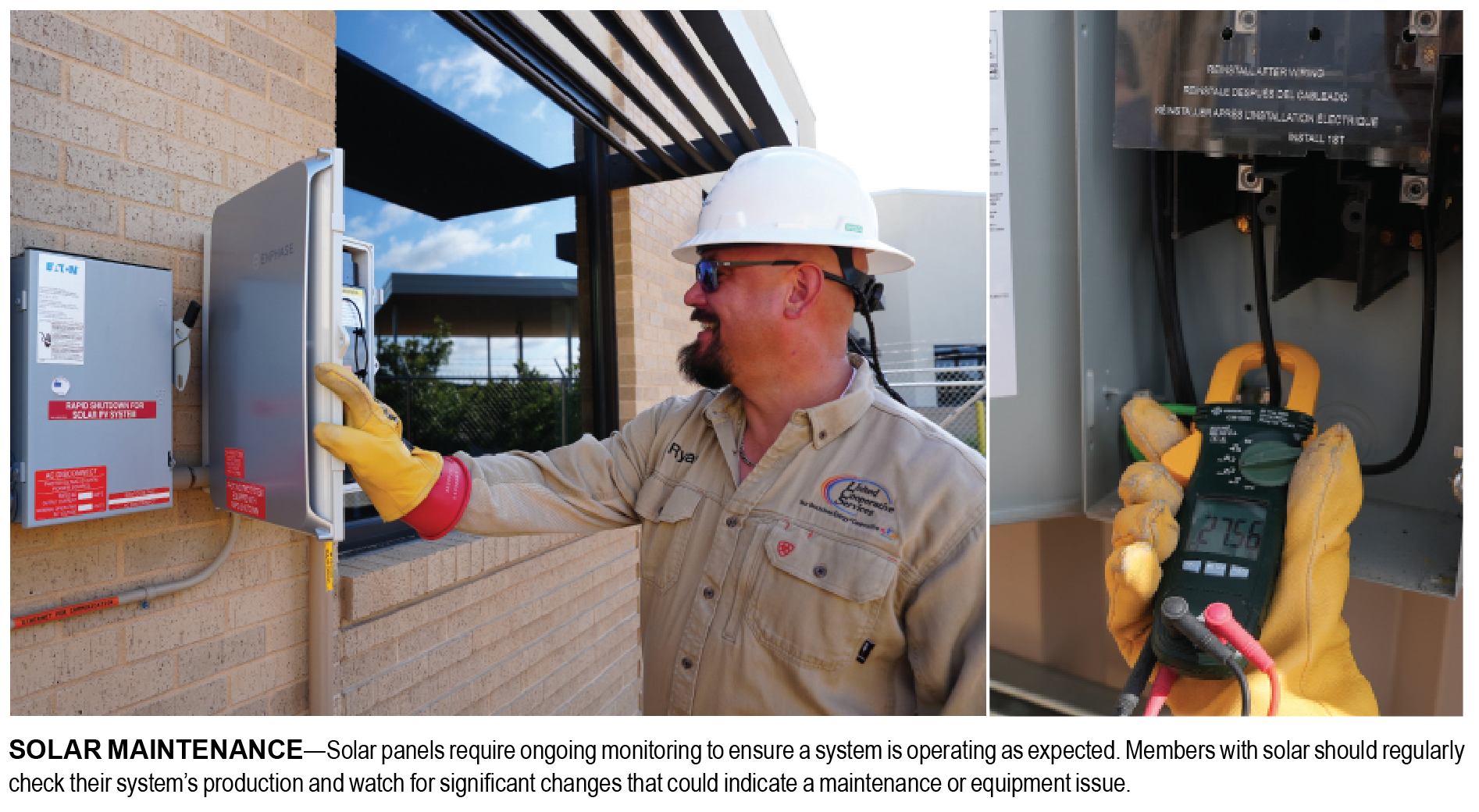
Solar systems require ongoing monitoring to ensure they are operating as expected. Problems with an inverter, communication equipment, wiring, panels or other components can reduce or stop production, and homeowners may not realize there is a problem.
Regular monitoring can help homeowners identify potential problems before they result in an unexpected electric bill. This can be particularly important for those who financed their systems because payments may continue even when a system is not producing electricity, potentially leaving the homeowner paying for the solar system while also purchasing more electricity from United.
Members with solar should periodically check their system’s monitoring app or production information, become familiar with normal production and watch for significant changes. If a system shows an error, stops producing or produces significantly less electricity than expected, members should contact their installer or appropriate service provider. They should also understand who is responsible for repairs and maintenance and what options are available if the original provider is no longer in business.
United is Here to Help
Whether a member is considering solar or already has a system, United’s Energy Solutions team can answer questions about solar, explain how a system interacts with United’s electric system and help members understand how solar affects their electric bill.
For members considering solar, the team can review historical energy use, help determine an appropriate system size and develop a solar solution based on actual usage and energy goals. United also works with qualified third-party contractors to provide installation services.
For members who already have solar, the team can help explain changes in an electric bill or solar production and identify questions to ask a service provider.
Solar can be an appropriate energy solution for some homeowners, but it is also a significant long-term financial and equipment commitment. Whether considering a new system or maintaining an existing one, understanding the agreement, expected production and long-term responsibilities can help members make informed decisions and get the most from their investment.
Read past issues