by
MEGAN NEWTON
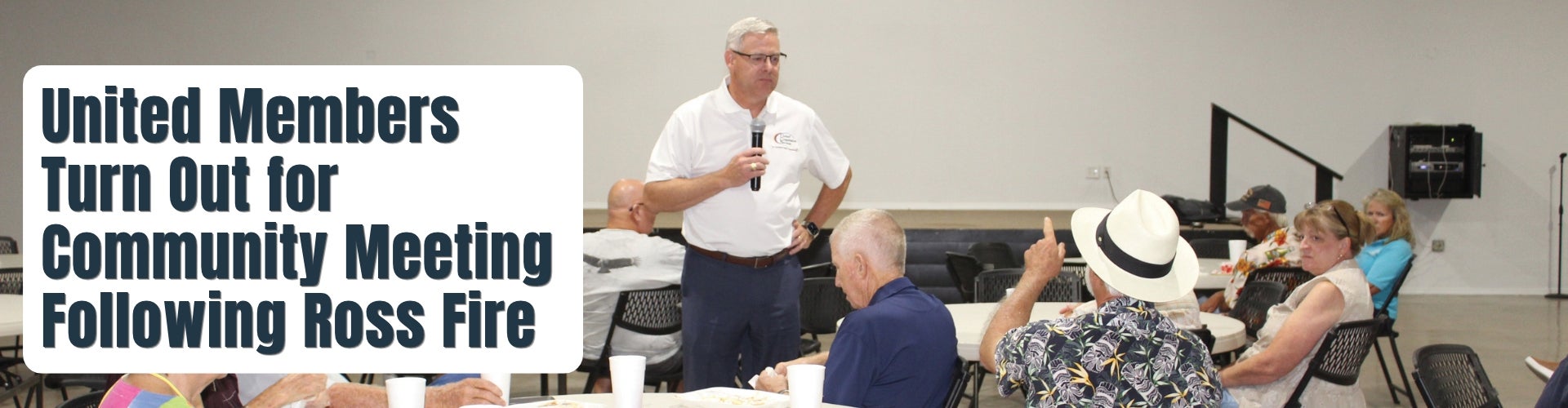
Just hours before United members in the Possum Kingdom area gathered for a community meeting, much-needed rain fell across the region, offering welcome relief after a week marked by the Ross Fire, evacuations and widespread damage. The difficult week, however, didn’t keep members from turning out for an evening of fellowship and conversation with United leaders.
The evening’s focus was on United’s high-speed internet service, growing electricity demand from data centers and the expansion of the co-op’s Community Solar Program.
Internet Expansion
Several members asked about the possibility of expanding United’s high-speed fiber service to additional areas around Possum Kingdom.
United CEO Cameron Smallwood explained that the co-op remains committed to finding ways to reaching more members while balancing the financial responsibility of doing so.
United has invested more than $300 million in its fiber network, but some remaining unserved areas are among the most expensive to reach, Smallwood said. Serving some of those locations could cost approximately $20,000 or more per potential subscriber.
“While I would like to continue to build in those areas, we can’t sink the electric co-op financially to do it,” Smallwood said.
United pursued federal broadband funding to help offset those costs, but competing providers ultimately received the funding to serve portions of United’s territory instead.
United continues to evaluate expansion and funding opportunities that could make additional construction financially feasible. Smallwood encouraged interested members to continue expressing interest to help United gauge demand.
Growing Electricity Demand
Members also asked about the rapid growth of data centers in Texas. Smallwood said United has received inquiries from more than 30 potential projects, although only 10 to 12 appear serious, with two involved in the state’s review process.
While data centers would represent significant new electric loads, they could also provide financial benefits to United’s broader membership.
For example, United members continue to pay long-term costs stemming from Winter Storm Uri and the bankruptcy of former wholesale power supplier Brazos Electric Power Cooperative. Significant new energy sales could spread those fixed costs across more kilowatt-hours, reducing the amount individual members pay toward them.
Data centers could also generate additional margins for the cooperative, potentially helping delay future rate increases.
“If data centers locate in our territory, we are obligated to serve them. Then that pushes those margins up,” Smallwood said. “But, it may also delay rate increases into the future.”
Smallwood stressed that data center developers would be required to pay the costs of connecting their facilities to United’s system rather than passing those expenses to existing members.
More Community Solar on the Way
Conversation later shifted to United’s Community Solar Program, which has remained at capacity for several years.
Smallwood told members United has secured additional solar capacity that will allow the cooperative to expand the program and accommodate more members.
United’s priority is to first accommodate members on the waiting list before offering additional subscriptions to current participants.
“We want all members to have the opportunity to participate,” Smallwood said.
The evening concluded with bill-credit drawings and time for members to visit one-on-one with United employees and cooperative leaders.
The strong turnout, along with members’ appreciation for United’s quick restoration efforts following the Ross Fire, highlighted the connection between the cooperative and the communities it serves.
Read past issues