

United’s CEO discusses electric costs, reliability and future
growth across North Texas in virtual telephone town hall.
by
MEGAN NEWTON
Energy costs, grid reliability and future growth across North Texas were among some of the top concerns United members raised during a live telephone town hall with United CEO Cameron Smallwood.
Nearly 3,000 members joined the interactive event April 23 to hear how the cooperative is working to maintain stable rates in a rapidly changing energy landscape.
Smallwood began the discussion by addressing one of the most common concerns shared by members—electric costs.
While electric prices across Texas increased following Winter Storm Uri in 2021, United’s rates have remained relatively steady since the cooperative began purchasing wholesale power through a new supplier in 2023. Smallwood said most changes members notice in their monthly bills are tied to seasonal energy use rather than rate adjustments.
“What you expect out of us is to keep rates stable, reasonable and affordable,” he said. “Our rate hasn’t changed much in three years. What changes is how much people use.”
To help explain why, Smallwood noted that about 75 percent of a typical electric bill reflects wholesale power supply, transmission and substation costs that the cooperative passes through to members without markup. The remaining portion supports the local distribution system and operations required to deliver reliable service.
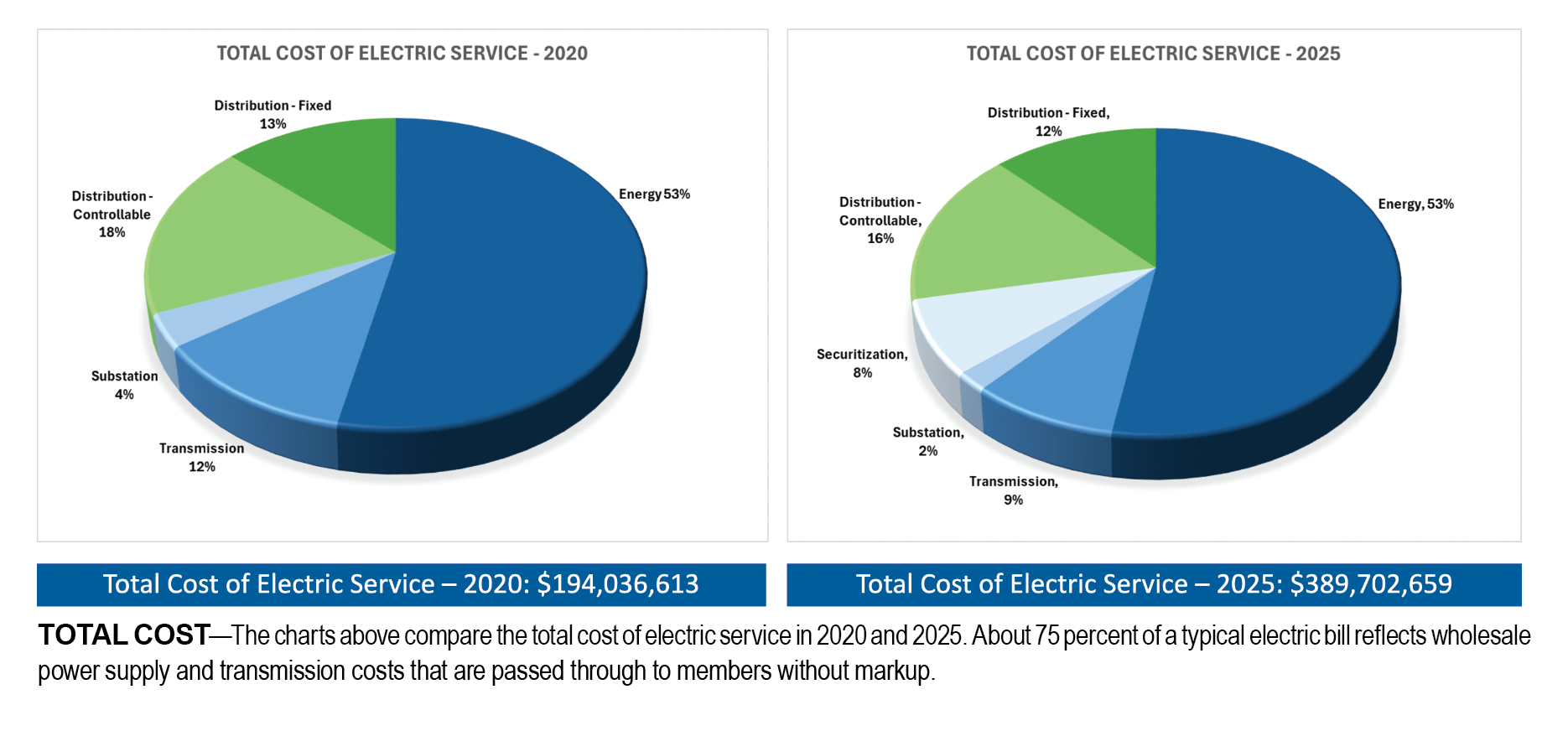
Smallwood also discussed broader industry trends that could influence future electric costs across Texas, including continued population growth, expanding manufacturing activity and increased demand from large-load requests such as data centers.
“The grid is going to get tighter from an energy standpoint,” Smallwood said. “When supply and demand isn’t balanced, cost tends to go up.”
Members wanted to know how those large loads could affect local electric service. Smallwood explained that United’s goal is to ensure those entities pay the cost of connecting to the system without shifting expenses to existing members.
“We want to make sure our members aren’t paying for them to add to the system. They have to pay their way,” he said.
At the same time, Smallwood explained that additional load growth can provide some benefits by spreading certain fixed costs across more kilowatt-hours and potentially delaying future distribution rate increases.
“When we have sufficient margins, we do not have to do rate increases on the distribution component of your bill,” he said.
Transmission infrastructure expansion was another topic discussed during the town hall, as members asked about changes taking place across the statewide grid. Smallwood noted that transmission costs within ERCOT have increased significantly during the past decade as utilities work to maintain reliability across a growing electric system.
In addition to these broader industry updates, members were reminded about the free programs and services United offers to help them better understand their energy use and manage their electric bills ahead of the blistering Texas summer.
Smallwood said that a home energy audit is the first step to help manage energy use and reduce monthly bills.
“An energy audit reveals problems that may, when corrected, save members significant amounts of money over time,” he said.
During an energy audit, United’s trusted energy advisors check for leaks, examine insulation, inspect HVAC systems and ductwork, and many other tests to provide members the best methods for improving energy efficiency.
Polling results during the town hall revealed that about 70 percent of participants had never received a free home energy audit from United. In addition to energy audits, United’s rebate programs and soon-to-be expanded community solar program are among the options available to help members better understand and manage their electricity usage.
As Smallwood wrapped up the event, he gave updates on United’s fiber internet service, which recently earned one of the highest customer satisfaction scores in the nation with an American Customer Satisfaction Index (ACSI®) score of 92.
United’s electric service also excelled in national comparisons. In the first quarter of 2026, United received an ACSI® score of 87, which is 15 points higher than the national averages for publicly measured investor-owned utilities.
Smallwood said those scores reflect the co-op’s continued focus on reliability, communication and service to members.
“These scores come directly from our members,” Smallwood said. “They reflect the trust our members place in us and help guide how we continue to provide reliable service and value across the communities we serve.”